
Praio’s artificial protocells improve rate, yield, stability, and solvent compatibility without redesigning the enzyme.
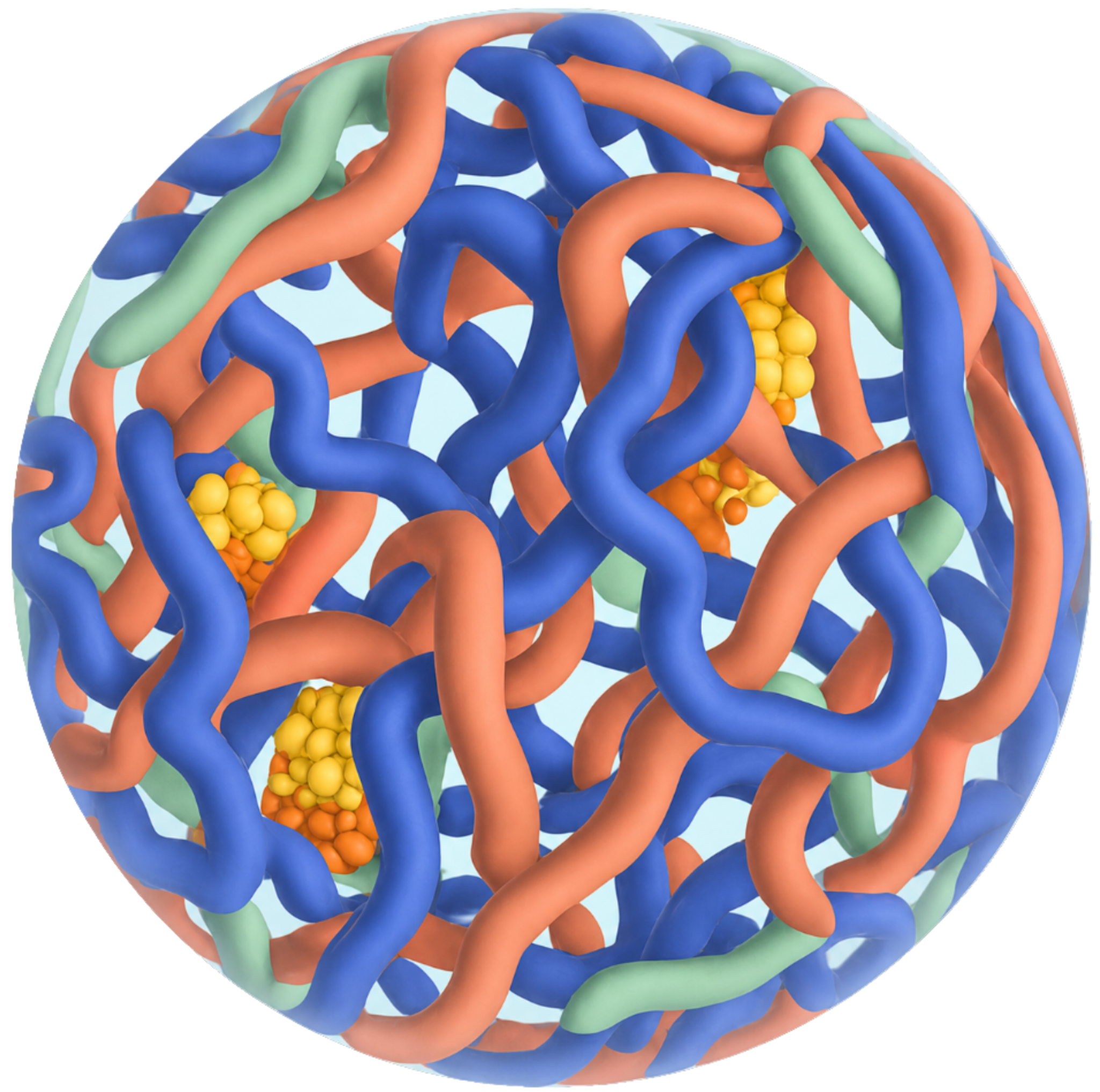
Sometimes the enzyme is not the problem. Its environment is
Enzymes evolved to function inside highly organized local environments. In industrial reaction conditions, that support is often lost.
That missing environment can limit rate, yield, stability, solvent compatibility, and reuse. The usual fix is to optimize the enzyme itself, even when the reaction environment is part of the gap.
Praio recreates that missing environment
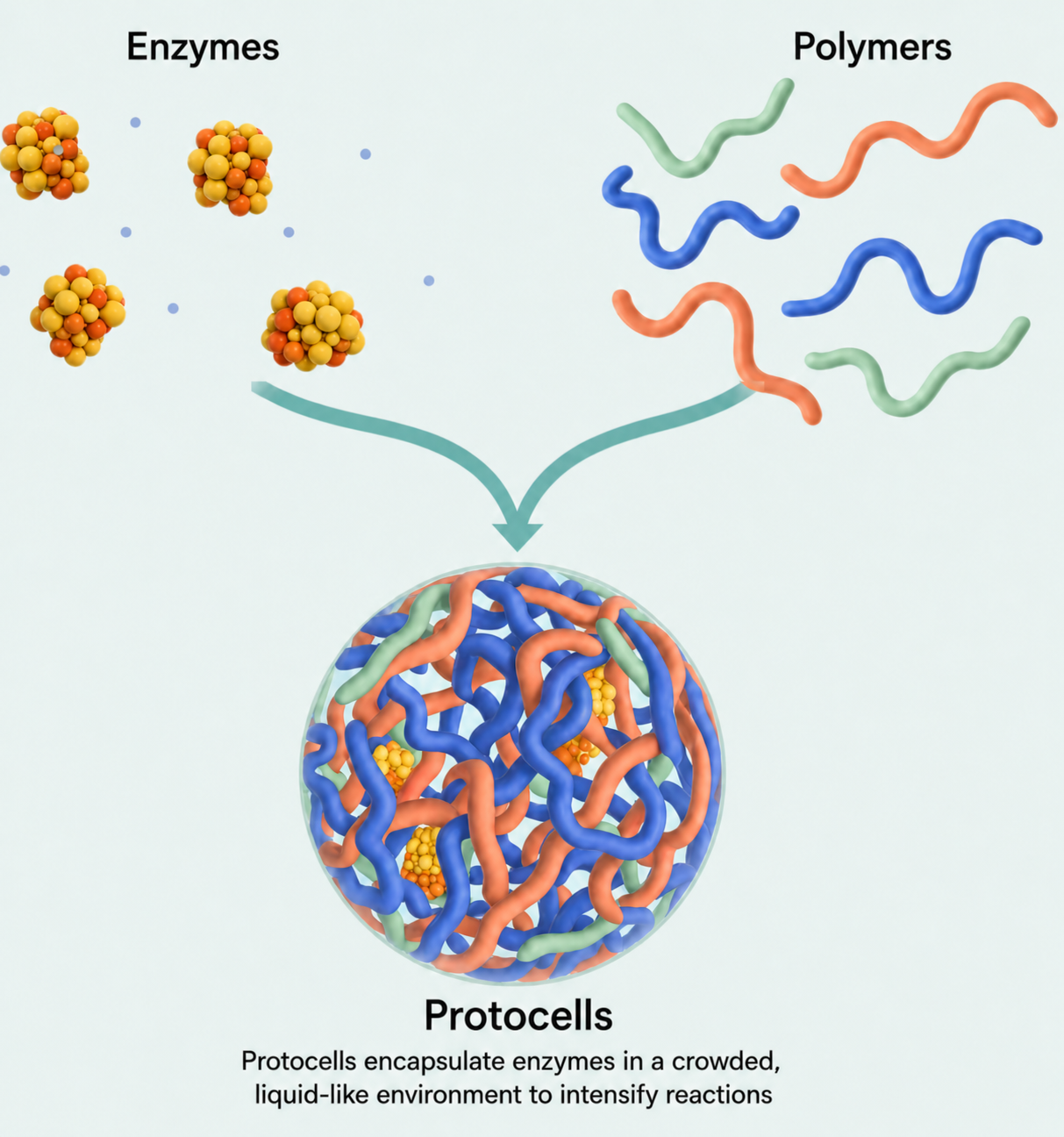
Praio combines polymeric components with enzymes to form artificial protocells: tunable microenvironments that create better local conditions for biocatalysis. This adds an orthogonal lever alongside enzyme engineering and process optimization.
These protocells can support activity, stability, multienzyme colocalization, and performance under more demanding process conditions.
Tunable Microenvironments
Create enzyme environments that can be adjusted for the reaction you want to run.
Higher Rates and Yields
Improve reaction performance by giving enzymes a more supportive local environment.
Organic Solvent Stability
Support enzyme function in challenging reaction conditions, including organic cosolvents.
Faster Multistep Reactions
Colocalize enzymes to support more efficient multistep cascades and cofactor-dependent chemistry.
Recover and Reuse Enzymes
Recover protocells by centrifugation or filtration for straightforward reuse workflows.
Complementary to Existing Workflows
Add environment engineering as an orthogonal lever alongside enzyme engineering and process optimization.
Built on measurable performance gains
Praio protocell environments have produced large rate enhancements across substrate and mixed-solvent conditions.
Multifold rate enhancement
Engineered protocell environments can increase catalytic rate versus free enzyme controls.
Performance across reaction conditions
Screen substrate, solvent, and formulation variables to find the strongest lift.
Designed for practical screening
Test multiple microenvironments, identify hits, then optimize the best formulation.
Direct integration into your workflow
Screen engineered microenvironments inside your existing enzyme evaluation workflow.
Add your enzyme
Use your existing enzyme and assay.
Add Praio components
Add Praio components to the reaction.
Evaluate performance
Screen performance using your current readout.
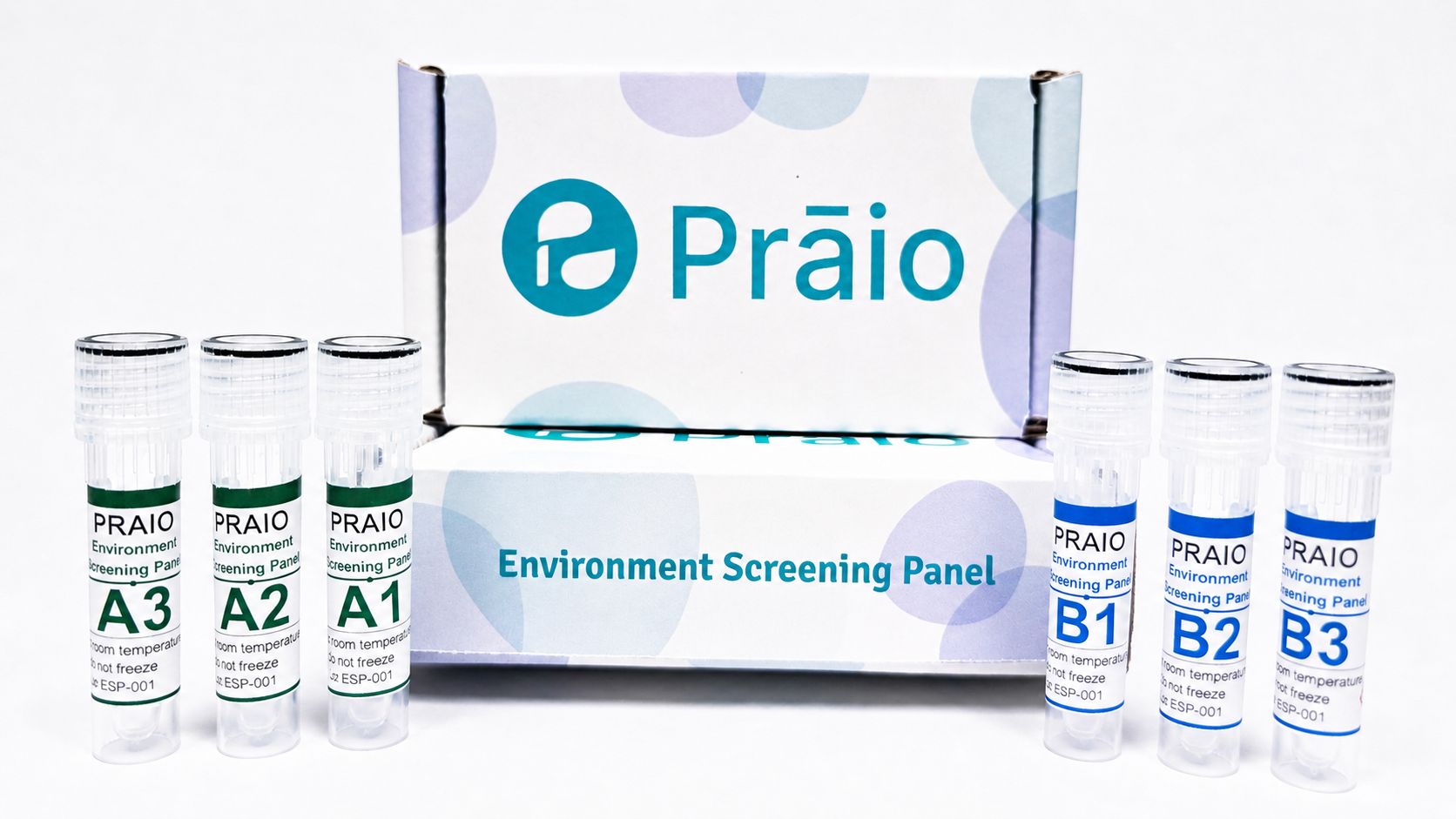
Start with our Environment Screening Panel
Start broad, refine hits, then move toward a process-deployable protocell catalyst.
1. Environment Screening Panel
Screen a curated set of microenvironments against your existing enzyme and assay.
2. Granular Optimization Screens
Expand around hits to tune formulation, loading, solvent compatibility, and stability.
3. Process-Deployable Protocell Catalyst
Translate the best formulation into a catalyst format for recovery, reuse, and integration.














Request your sample environment screening panel
Start with your details, then tell us what you want to improve.